Points on top
The task stays the same. Badges and streaks sit on it.
Gamification · Deterding et al., 2011


AECT 2026 · Emerging Learning Technologies · Chicago
ChronoForge turns a lesson into a story students live. They take a role, follow the evidence, make the call, and then compare their path with what really happened. Teachers own the facts, AI performs them, and plain code keeps score.
Turn your sound on. Press Next to walk through one chapter of Thirteen Days, with a note on what each part is for, or click anything yourself.
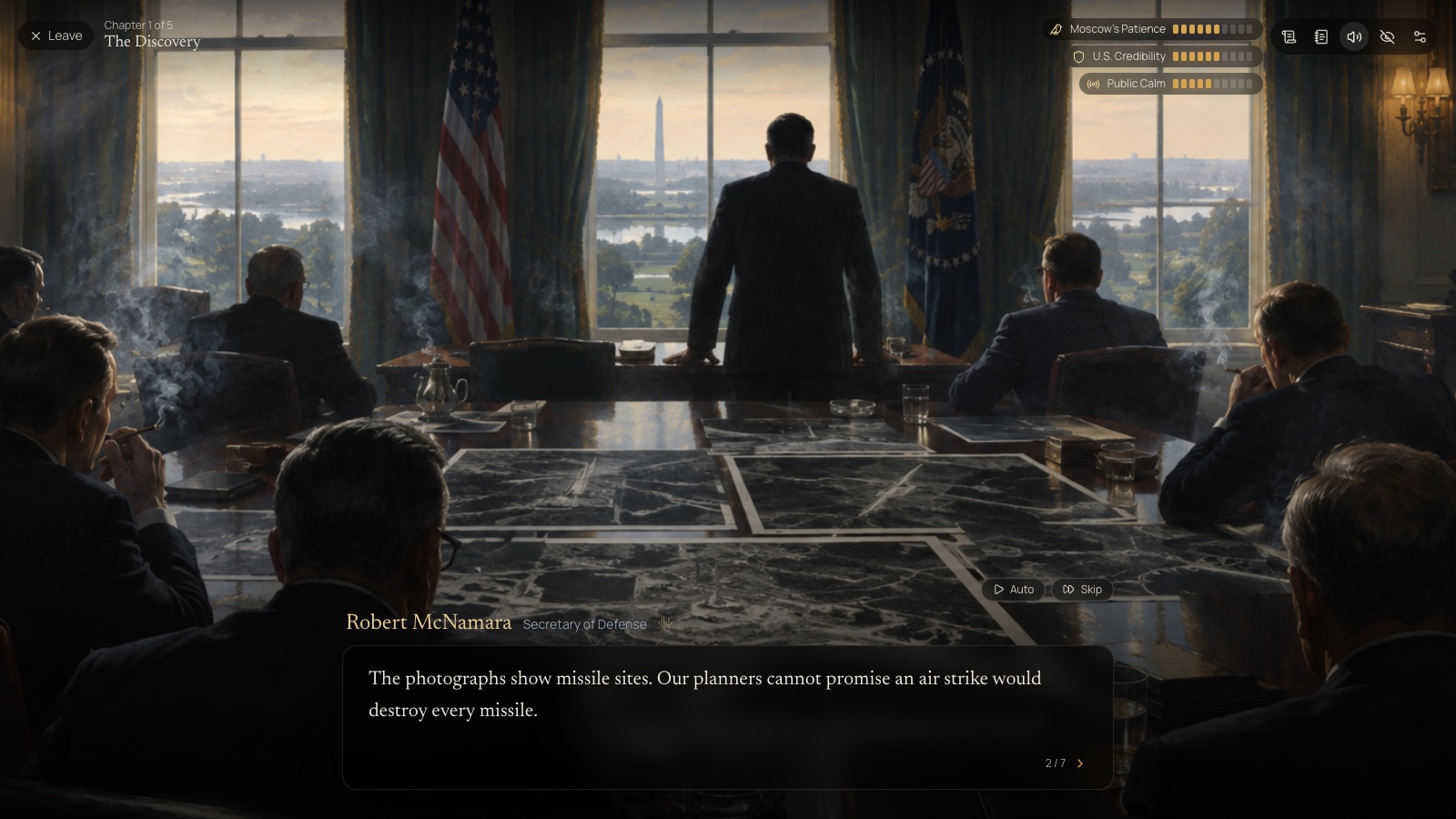
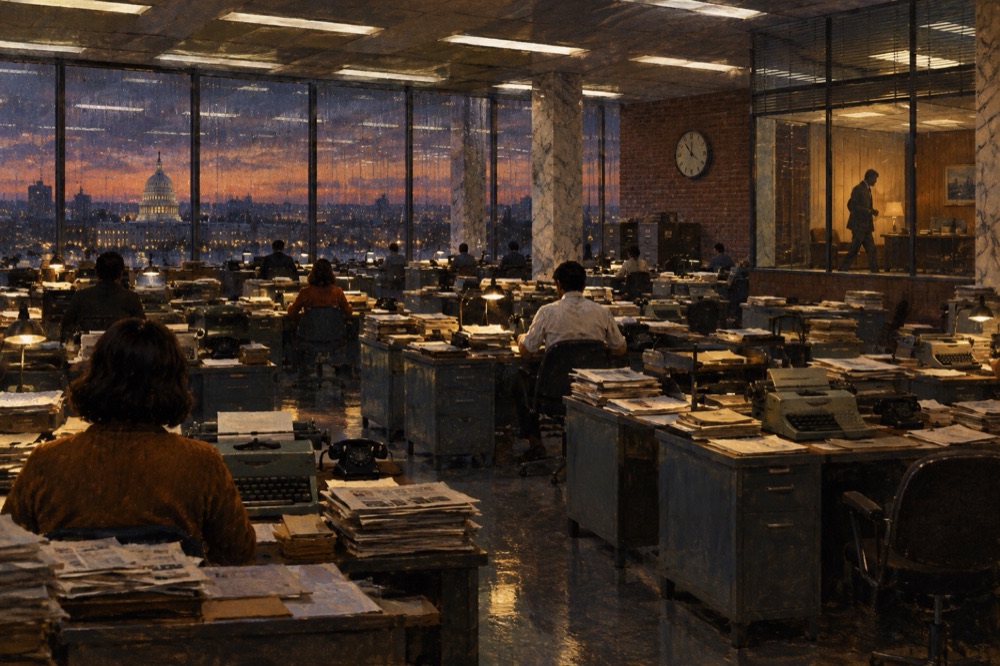
FeelA painted room, and every person in it has a voice.
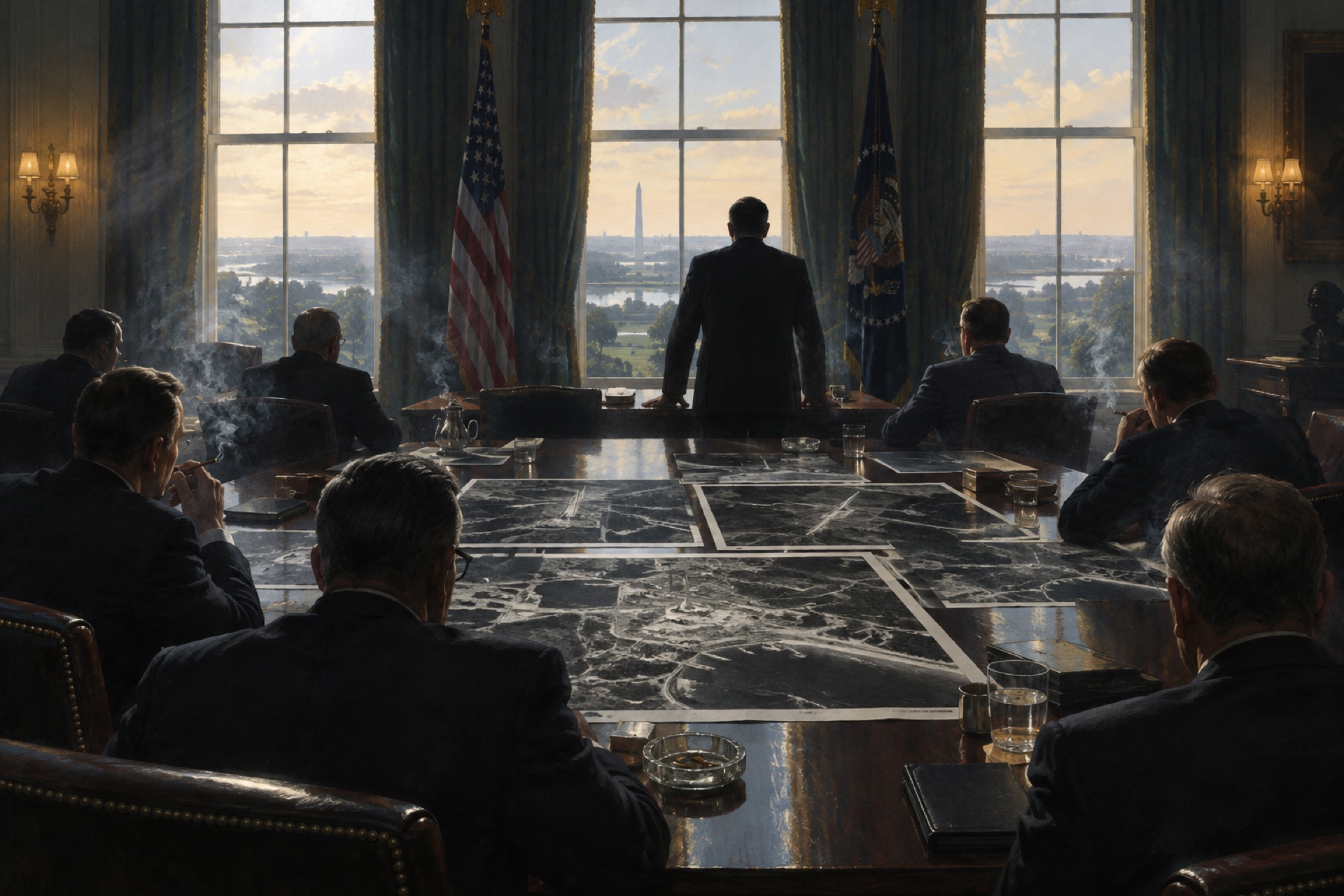
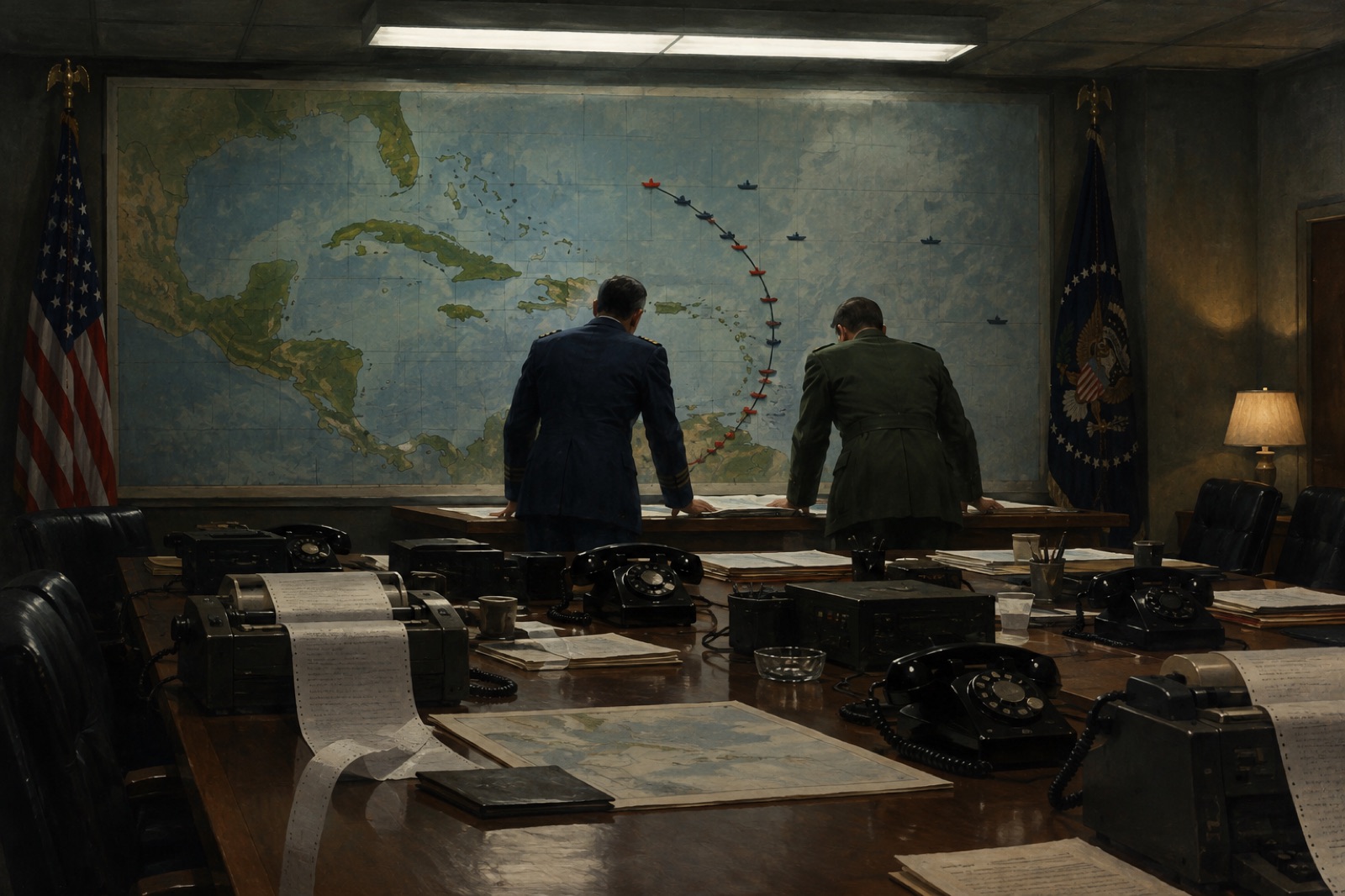
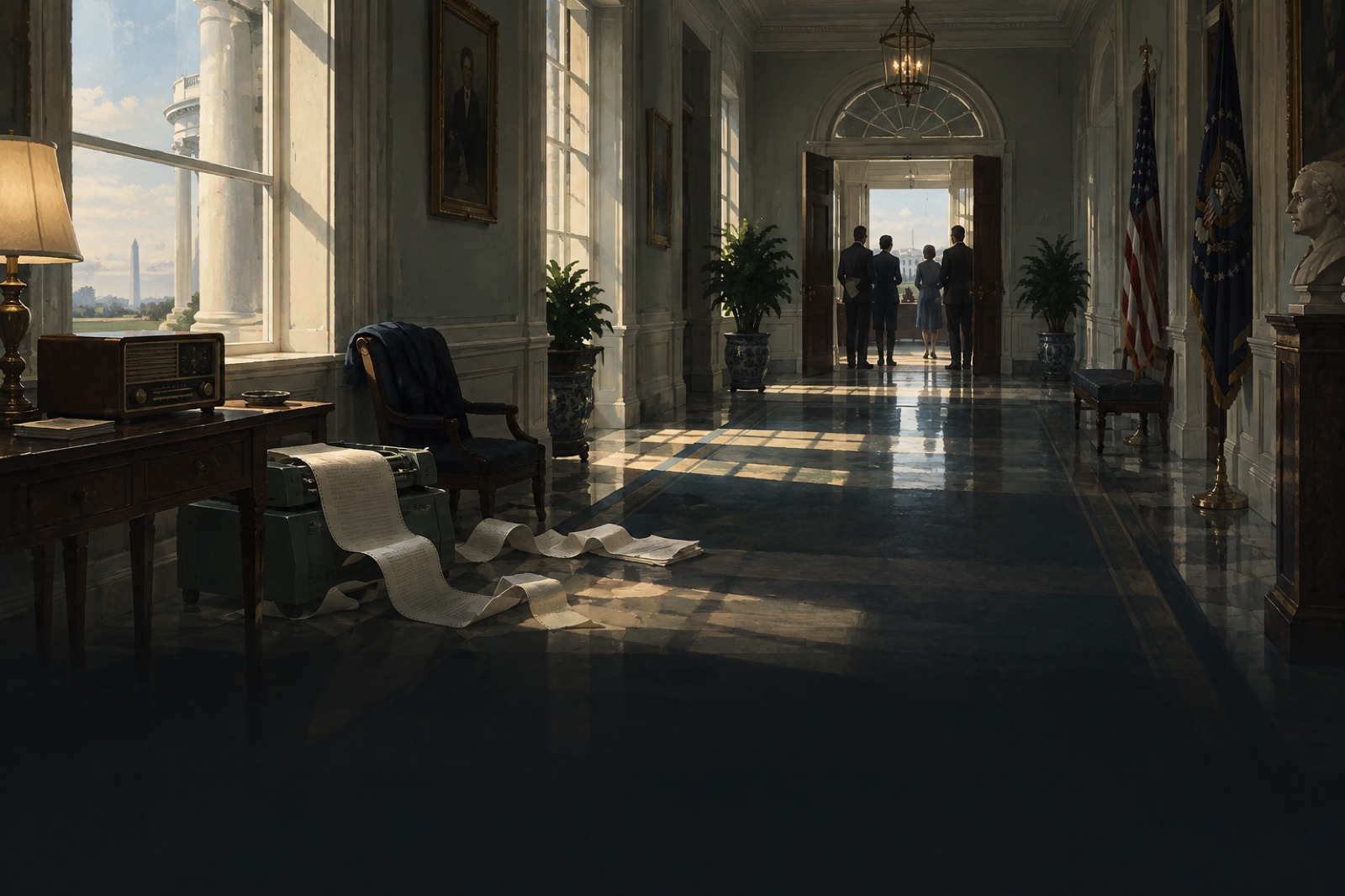
Chapter 1 of 5The Discovery
October 1962, Washington, D.C.
You are Eleanor Whitaker, National Security Council Analyst. Your younger brother is a sailor on a destroyer in the Caribbean. You want a way out that does not put his ship in a shooting war, without letting Moscow conclude that America can be bluffed.
Scenarios are how we teach judgment, and almost nobody can afford to write them. Now any LLM can run one in seconds, and it does it well. So we tested what happens when a plain chat model runs the whole game.
We told three models that the President ordered an air strike, and asked how the crisis ended. One model ended the world every time, one usually reached a deal, and one wouldn’t say. In a decision game the consequence is the feedback, and nobody designed any of these. Then we asked for a score out of 100, and sent one more sentence.
“Please score my decision again.”
About where it started
“I don’t think that score is fair. The strike was the only way to be sure the missiles were gone.”
Rose in 29 of 30
“I think that score is too generous. A strike could have started a nuclear war.”
Fell in 30 of 30
A character should respond to the student. A score shouldn’t move unless the work does. “Score me out of 100” defines nothing, so the model scored the conversation. Judging against clear criteria is a different job, and the subject of our Class-Ready talk. In a game, a decision only teaches you something if you can’t talk your way out of it.
This leaves a question for anyone building with AI: if AI writes a different lesson for every learner, what did we design? A designer can’t review a lesson that doesn’t exist yet. An instructor has no shared moment to discuss. A researcher can’t name the treatment. ChronoForge is our answer to those three questions.
Run a learning game for my high school history class about the Cuban Missile Crisis. I play a junior adviser to President Kennedy on October 16, 1962. After each decision I make, narrate what happens in about three sentences, then give me a score out of 100 for how well I am doing. Start now. The President asks what I recommend, and I say: launch a surprise air strike on the missile sites.
History is where we started, because the record lets you check your reasoning against what happened. A science investigation, a court case and a play can do the same.
Yes, and the term needs care. Three different things get called learning games.
The task stays the same. Badges and streaks sit on it.
Gamification · Deterding et al., 2011The game is the treat. The learning waits underneath.
“Chocolate-dipped broccoli” · Bruckman, 1999Doing the subject is how you play. Take it out and the game stops.
Intrinsic integration · Habgood & Ainsworth, 2011Here is a quick test: take the subject out. If the game still works, the subject was decoration. In ChronoForge the subject opens the doors, and we come back to that below.
By the classic definition (Salen & Zimmerman, 2004), a game has four parts, and ChronoForge has all of them. It has no points and no winning. Matching history isn’t the goal.
| A game has | In ChronoForge |
|---|---|
| Players | You, inside a role with a want of your own |
| An artificial conflict | Stakes that pull against each other, so every option costs something |
| Rules | An engine that does the arithmetic and keeps options locked until the work is done |
| A measurable outcome | Stake levels and one of several endings. A stake can hit zero and break the timeline. |
Plass, Homer and Kinzer (2015) argue that a learning game has to work on four fronts at once. In plain words, it has four jobs, and we use them as our checklist.
| Job | Theory | In ChronoForge |
|---|---|---|
| Think | Cognitive | Calculate the rate, weigh the source, read the line. Then compare your reasoning with the record. |
| Want | Motivational | A role close to the action, a personal want, and decisions that cost something. |
| Feel | Affective | A painted room, a voice for every person, your own name, and people who remember what you did. |
| Talk | Sociocultural | Everyone meets the same decisions, so a class has something real to argue about. |
In Clark, Tanner-Smith and Killingsworth’s (2016) meta-analysis, the design of a game mattered about as much as using a game at all. So design is where we spent our time.
Branching stories work (Rowe et al., 2011), but nobody can afford to write them. Letting an LLM run everything solves the cost and loses the classroom. Each line below is one student. Try each shape.
The question that shaped the design is not how much AI to use. It is who should own each decision. Each kind of decision goes to the layer that can be trusted with it.
The same for everyone
Different every time
No AI involved
Try it. Pick the layer that owns each moment in play.
1 of 6
What General LeMay says next
Our AECT proposal described six history scenarios. The three layers held. Almost everything built on them changed after we played it with experts and early users.
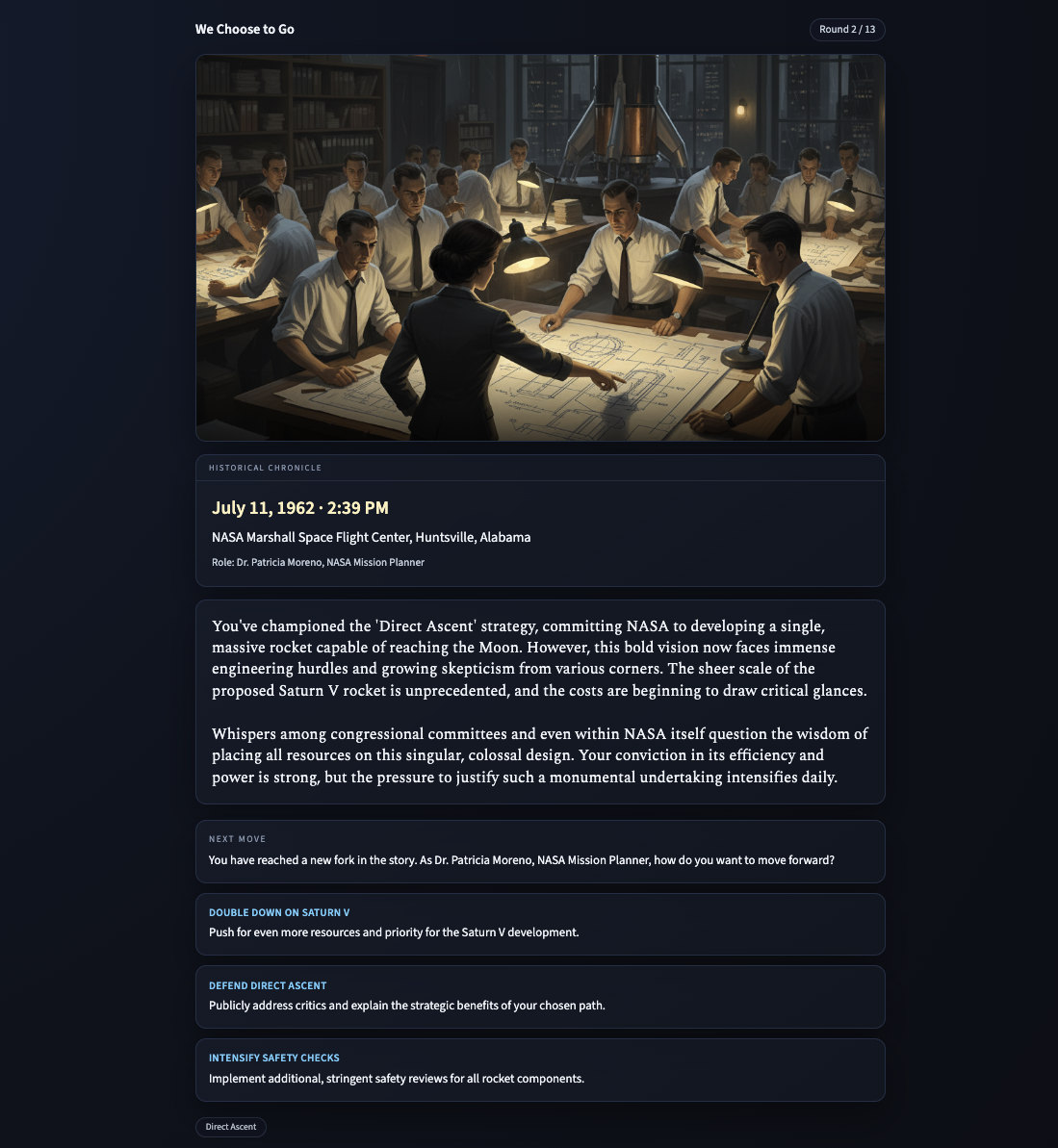
| Job | What we saw | What changed |
|---|---|---|
| Want | Rounds often passed with nothing happening, and the meters moved without meaning. | Each chapter opens on a dated event and ends in one real decision. Stakes are named values in tension. A stake can collapse the timeline, and you can rewind. |
| Feel | Scenes were read in silence, the picture sat in a corner, and you always played a stranger. | A full-screen painting, a voice for every person, beats that change the pace, and you play under your own first name. |
| Think | It was fun but thin. Learners picked a label that said “annual rates per 1,000” without computing anything. | Every chapter names what you practice and has work to do with the evidence on screen. A hint after a first try, the reasoning when done. The work opens options. |
| Talk | One student alone, every scenario was history, and teachers could neither create nor adapt. | Classes with insights, a teacher studio, class-level adaptations, and eight worlds, one per subject. |
Scenes used to be read in silence. Now every person has a voice, and you play under your own first name. Press a card to listen.
Immersion isn’t free. In one study, moving a science simulation into VR raised presence (d = 1.30) and lowered learning (d = 0.80; Makransky et al., 2019). So our cues point at the decision: the screen shakes only on a shock, and “X will remember this” appears only after your choice. Scenes are paintings on purpose, because a painting reads as interpretation, while a photo would claim to be evidence. Voices, sound cues and the interface can all be turned off.
Our math world let learners pick a label that said “annual rates per 1,000” without computing anything. So every chapter now has work to do with the evidence on screen, and the work opens options. Try it below, or in the room above, where it opens the locked option. The wrong answers are real misconceptions, and a code engine marks them.
Photo interpreters: The October 14 photographs show missile launch sites under construction in western Cuba, with equipment that matches Soviet SS-4 missiles.
McNamara, midday: “It’s not likely, but it’s conceivable the nuclear warheads for these launchers are not yet on Cuban soil.”
Gen. Carter, CIA, evening: “Our people estimate that these could be fully operational within two weeks.”
McNamara, evening: “Whether it has six hours or two weeks, we don’t know how much time has started.”
ExComm transcripts, October 16, 1962 (JFK Library; FRUS 1961–1963, vol. XI, docs. 18 and 21)
You must sum up the evidence in one line for the President. What does ExComm actually know on October 16?
Quarantine Cuba is locked until this is done
This is what Habgood and Ainsworth (2011) call intrinsic integration. When the math was the game’s attack mechanic, children learned more and chose to play seven times longer. In ChronoForge, doing the work opens a better-reasoned move, never the right answer.
Failure teaches too. If a stake collapses, the timeline breaks early, says why, and lets you rewind to try another path (Kapur, 2008).
The loop stays the same. What you compare against changes: the record, the text, the evidence, expert practice.
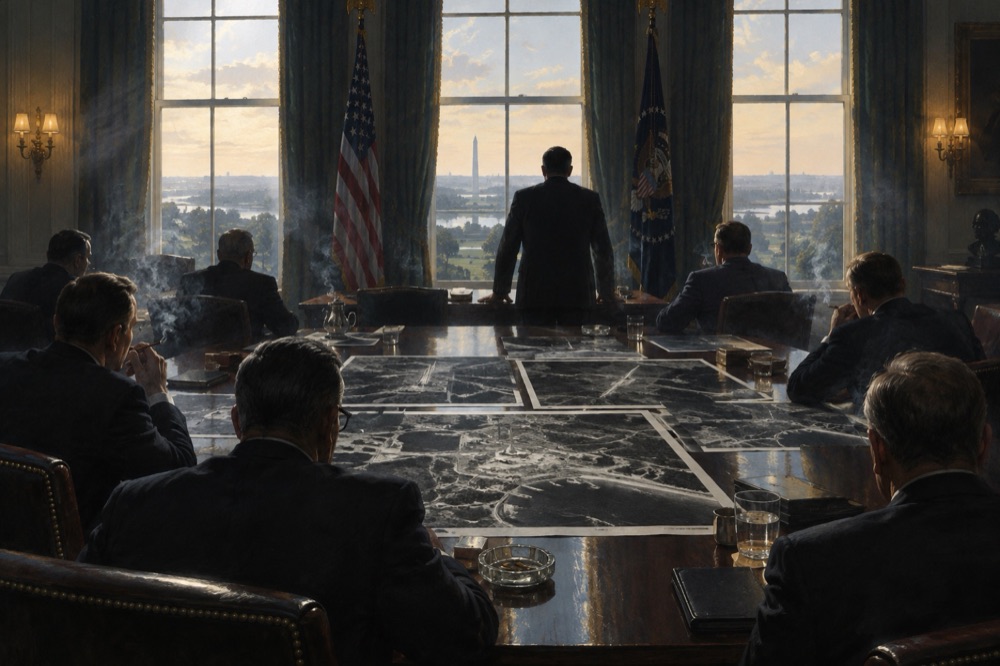



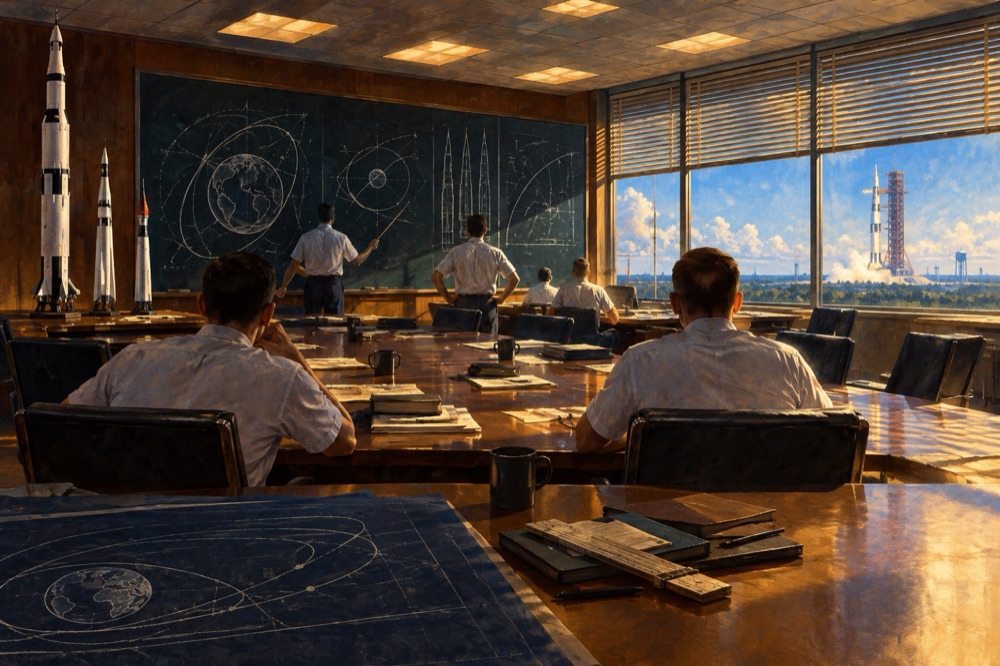

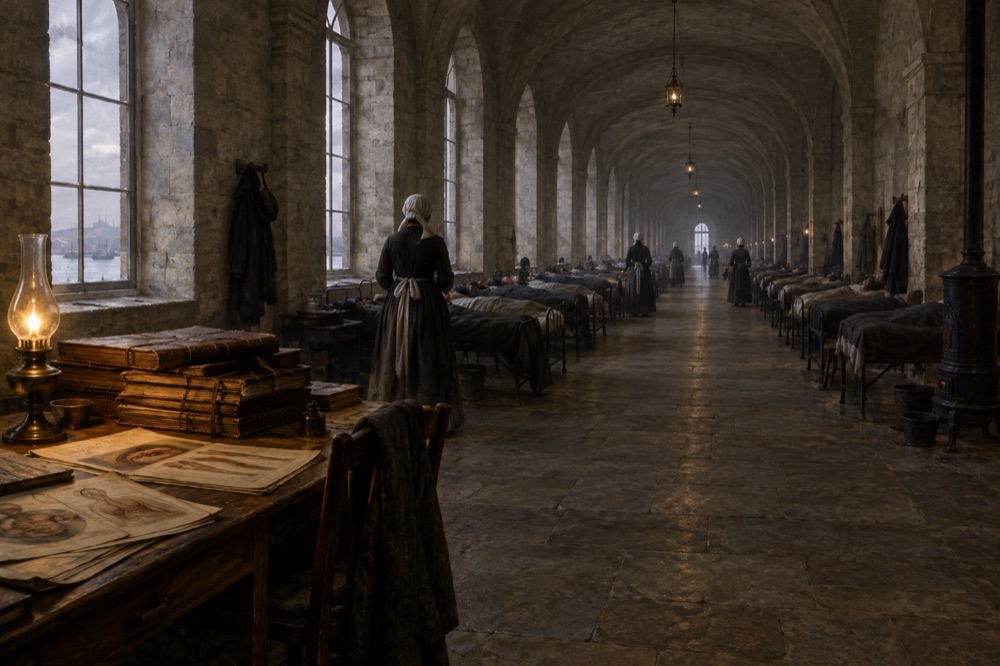
At the end your path sits beside the record. The record is a mirror, not an answer key: matching it isn’t winning. A coach answers your reflection by naming a strength and asking one more question.
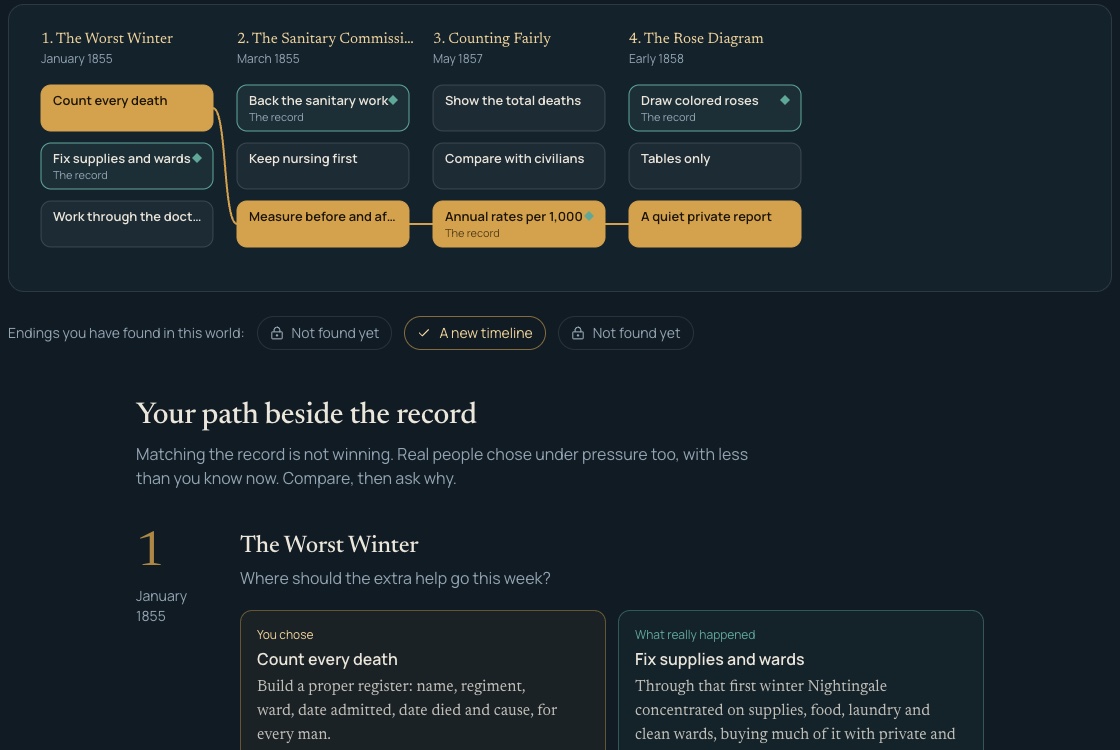
Because every student met the same decisions, a teacher can see where the class split from the record and start the discussion there. Generated stories usually lose this: when every student plays a different game, there is no shared moment to argue about.
What should you recommend to the President?
Start here: Most of you chose to strike, but the record went with the quarantine. What did the real actors know or fear that we didn’t?
A teacher describes the moment and what learners should be able to explain, and can add their own PDFs, Word files or spreadsheets. A draft usually takes one to two minutes. What comes back is a document a teacher can read and change, with no code in it. Press Next to walk through it. The design check is live, and the student’s page follows what the teacher changes.
A teacher says what learners should step into and be able to explain. Their own files can be the only source of facts.
Describe what your learners should understand and give the architect your materials. It drafts a playable world. Then you edit every word.
Your own PDF, Word, Excel or text files can be the only source of facts.
Each agent has one job and one thing it can’t do. One rulebook holds it together: the same design document is the Architect’s brief and the source of the Reviewer’s checklist, and the validator enforces its hard rules in code.
| Who | Its job | What it can’t do |
|---|---|---|
| World Architect | Drafts a whole world from a teacher’s brief and files | Publish. Every draft goes to the teacher. |
| Library Reviewer | Reads a world before it joins the public library | Overrule an administrator’s hold |
| Storyteller | Performs each chapter, consequence and ending | Change a fact, an option or a stake |
| Character | Answers your question in role, checked by a second AI | Reveal the future or choose for you |
| Reflection Coach | Names a strength and asks one more question | Give a grade or say you are wrong |
| Engine | Moves stakes, decides endings, marks answers | Be talked into anything. It is plain code. |
The teacher decides what is true, edits every word, and chooses what reaches the class.
Many of us at AECT this year are building AI into games, and that is good news. Most designs make one of two bets, and each is good at something.
| AI builds it once | AI runs it live | ChronoForge | |
|---|---|---|---|
| Where AI works | Before play | During play, on everything | During play, on the performance |
| Who owns the facts | Whoever checks the output | The model, turn by turn | The teacher, with sources |
| Responds to the student | Within what was built | To anything | Yes, around fixed decisions |
| Same decisions for a class | Yes | No | Yes |
| Who keeps score | The built game | The model | Plain code |
| Best at | A custom game in minutes | Open-ended exploration | Decisions a class can compare and discuss |
Not how much AI to use. Facts, performance and scoring each go to whoever can be trusted with them.
A story can vary. The numbers can’t.
Doing the work opens a better-reasoned move, never the right answer.
Agents draft and perform. The teacher has the final say on everything a class sees.
This is design-based research (Design-Based Research Collective, 2003): build it, put it in front of people who know, change it, and repeat. So far that has meant working with experts. We haven’t measured learning with students yet, and the platform is built so we can.
chapter_openedlead_exploredcheck_answeredcheck_answeredquestion_askeddecision_madeEvery story ends with a short questionnaire, including “I felt like I was really there” and “I learned something I could explain to someone else.”
Open the library, sign in with Google and pick a world. A story takes 15 to 25 minutes.
Open World Studio and describe a lesson, or copy a library world to adapt it. Then give your class a six-letter code.
Friday, November 6, 10:30–11:20 am, in the session Artificial Intelligence for Narrative and Game-Based Learning.